
Learning to Listen Beyond Words
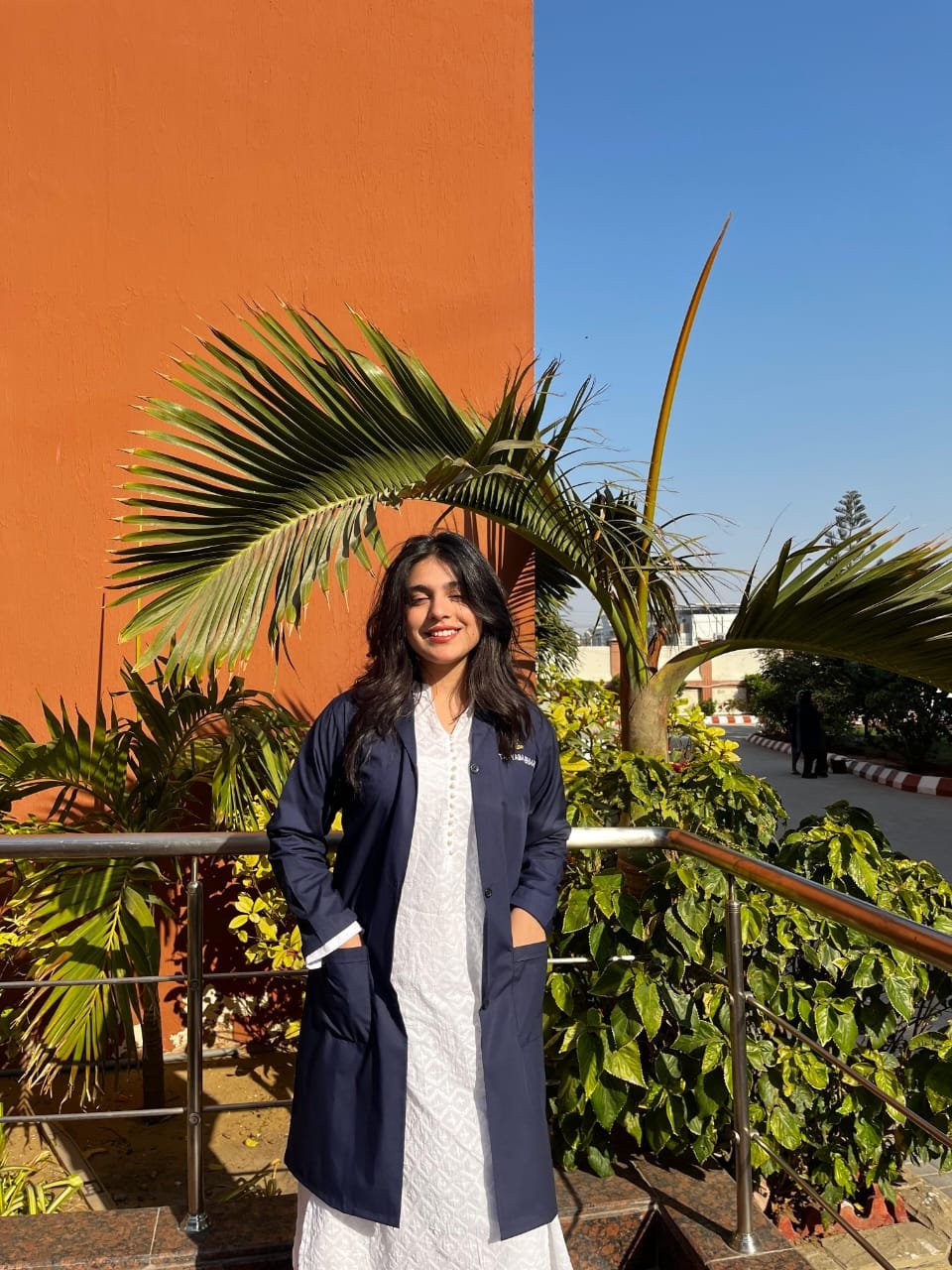
Tayyaba Rehman
Third-year undergraduate psychology student · Institute of Professional Psychology, Bahria University, Karachi Campus
Neurodevelopmental Disorders Internship · October 2025
Tayyaba Rehman completed IQ’s Neurodevelopmental Disorders Internship in October 2025. It was one of her earliest hands-on clinical learning experiences — and one that helped shape how she understands communication, observation, and clinical work.
From Classroom Learning to Clinical Confidence
My name is Tayyaba Rehman, and I am a third-year BS Psychology student at Bahria University, Karachi Campus. My main interests within psychology are clinical practice and research. I have always been drawn to learning experiences that help me understand human behaviour beyond classroom theory.
Before joining IQ, I had completed an observership at CMH. That experience gave me exposure, but I wanted to understand neurodevelopmental work more closely. IQ had already been on my list since my first semester. I had been following Dr. Ayesha and IQ on social media, and I was interested in the way IQ gave psychology students access to practical learning.
I joined IQ’s Neurodevelopmental Disorders Internship around October–November last year. It became one of my earliest hands-on clinical learning experiences.
What made the internship meaningful for me was the structure. We were paired into groups and assigned a client, so we were able to build rapport, observe behaviour over time, and learn under supervision. As a student, that balance mattered. I was close enough to clinical work to learn from it, and supported enough to ask questions when I was unsure.
Before the internship, I wanted to interact with real clients, observe assessments, and understand how professionals communicate with clients and families. At IQ, those things were part of the learning process. We were observing, asking questions, and trying to understand what was happening in front of us.
When Behaviour Carries Meaning
One moment that stayed with me involved the client I was assigned. He had an intellectual disability and was non-verbal. One day, his father came to visit him, and his reaction changed immediately. His eyes started to shine. He began clapping and laughing. He got up as if he was ready to leave with him.
When he came back to the session, he started performing every task with more ease.
That moment changed how I understood communication.
Because he could not express himself verbally, his behaviour carried meaning. His expressions, movements, and emotional response were all telling us something. It made me realize that communication does not always look the way we expect it to look. — Tayyaba Rehman
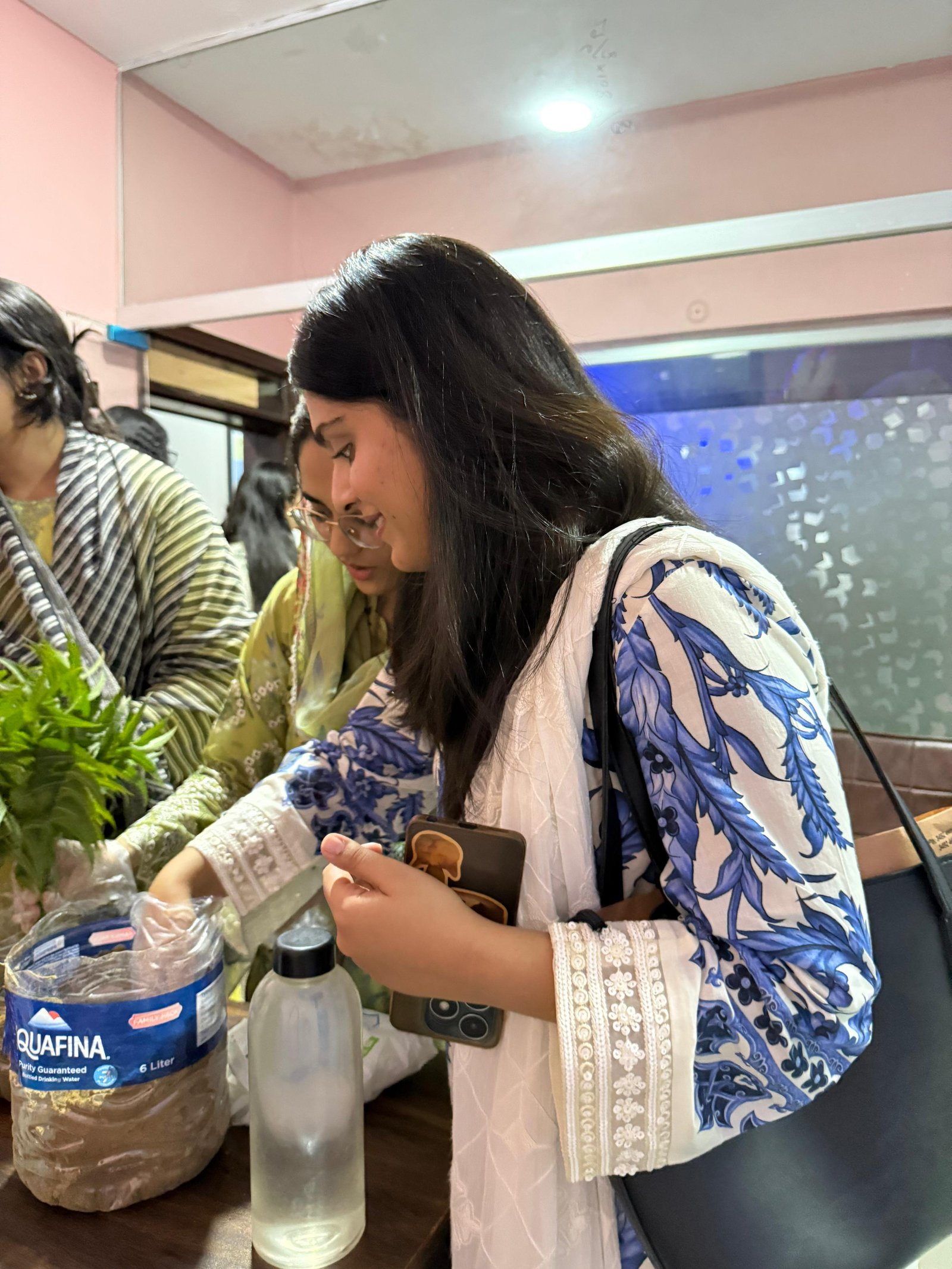
Afterwards, we asked Dr. Mahnoor about what we had observed. She explained the client’s clinical background and helped us understand his relationship with his family. That guidance was important because it helped us look at the moment clinically. We were able to connect his reaction with familiarity, comfort, attachment, and his history.
That is where supervision made a difference for me. Without guidance, I may have remembered the moment only as something emotional. With supervision, I began to understand it as clinical information.
Patience as Practical Skill
Working with the same client also taught me patience in a very practical way. If he suddenly got up and sat on the floor, we learned to give him time instead of forcing him to come back immediately. Sometimes he needed space before he could engage again.
That changed the way I understood rapport. Building rapport did not always mean continuous interaction. With him, it often meant allowing enough time and space for him to feel comfortable.
Dr. Mahnoor also taught us that communication had to be clear and direct. Long explanations were less helpful for our client. Simple instructions worked better. When we became clearer and more consistent, he responded better.
That was one of the most useful parts of the internship for me. I was able to see how small changes in the way we communicate can change the way a client responds.
Staying Respectful When Situations Are Difficult
There was another incident where this learning became even more real. One day, our client was tense and had soiled his clothes during the session. The situation was difficult, and I knew I could not react in a way that embarrassed him or made him feel judged. He was already sitting on the floor and was not getting up.
I tried to stay calm and give him time. Then I went to Dr. Mahnoor and told her I felt something was wrong. She came in, understood the situation, and guided us on what to do.
That experience taught me that patience in clinical work is practical. It shows in how you respond when a situation is uncomfortable. It shows in whether you can stay respectful when a client is struggling. It shows in whether you can ask for supervision instead of reacting without understanding.
Skills That Stay With You
The skills I learned at IQ have stayed with me.
I am currently interning at the Psychosocial and Academic Well-being Center at Liaquat University of Medical and Health Sciences, where I work with university students. Many students come in with adjustment concerns, academic stress, and personal difficulties.
The observation skills I developed at IQ help me in that setting too. I try to give students space to speak before offering advice. I pay attention to what they may be finding difficult to say directly. I also try to remain calm when someone’s reaction is hard to understand at first.
My experience at IQ taught me that behaviour usually has a reason behind it. That mindset helps me listen more carefully and judge less quickly.
The internship strengthened my confidence and reinforced my interest in the mental health field. It showed me how much patience, consistency, and respect clinical work requires, but it also showed me how much students can learn when they are given real exposure with proper supervision.
For Students Considering Clinical Training
For any psychology student considering clinical training, I would encourage them to apply to IQ. The experience helped me understand clinical work beyond university classrooms, and it gave me skills that I still use in my current internship.
For me, IQ was where clinical work started to feel real. — Tayyaba Rehman
Our community stories reflect the learning, compassion, collaboration and practical work that sit behind healthcare and welfare.