1992 — Where it began
A 10-bed psychiatric unit laid the foundation.
Health Vision's work began with a 10-bed psychiatric unit in Karachi, laying the foundation for what would later become IQ Institute of Neuropsychiatry.
Health Vision has worked across healthcare and community welfare since 1992, growing from a small psychiatric unit into a network spanning mental health, multidisciplinary medical and surgical care, clinical training, and community initiatives.
To provide accessible, ethical, and quality healthcare while extending support to individuals and communities facing financial and social barriers to care.
Through healthcare services, mental health support, community welfare, professional training, and partnerships, Health Vision works to respond to needs both within its institutions and beyond them.
A healthcare and welfare network where people can access appropriate care with dignity, regardless of their financial circumstances, and where stronger services, professional training, and community partnerships contribute to healthier communities.
To provide and support medical, surgical, psychiatric, psychological, neurodevelopmental, and rehabilitative care across different financial circumstances.
To subsidize healthcare and provide patient assistance for individuals and families who may otherwise struggle to afford appropriate treatment.
To continue developing psychiatric, psychological, neurodevelopmental, occupational therapy, and rehabilitation services across inpatient and outpatient settings.
To expand facilities, equipment, specialties, clinical systems, and professional capacity in response to identified healthcare needs.
To provide structured clinical training, supervision, and educational opportunities for students and early-career professionals.
To undertake community health, outreach, preventive care, relief, and welfare initiatives in areas where access to essential services is limited.
To collaborate with universities, healthcare institutions, welfare organizations, professionals, donors, and community partners on healthcare, education, research, and social welfare initiatives.
Health Vision's history extends beyond the development of its hospitals. Over the years, its work has included healthcare delivery, professional training, public health, disaster response, community development, research, and partnerships across Pakistan.
Health Vision's work began with a 10-bed psychiatric unit in Karachi, laying the foundation for what would later become IQ Institute of Neuropsychiatry.
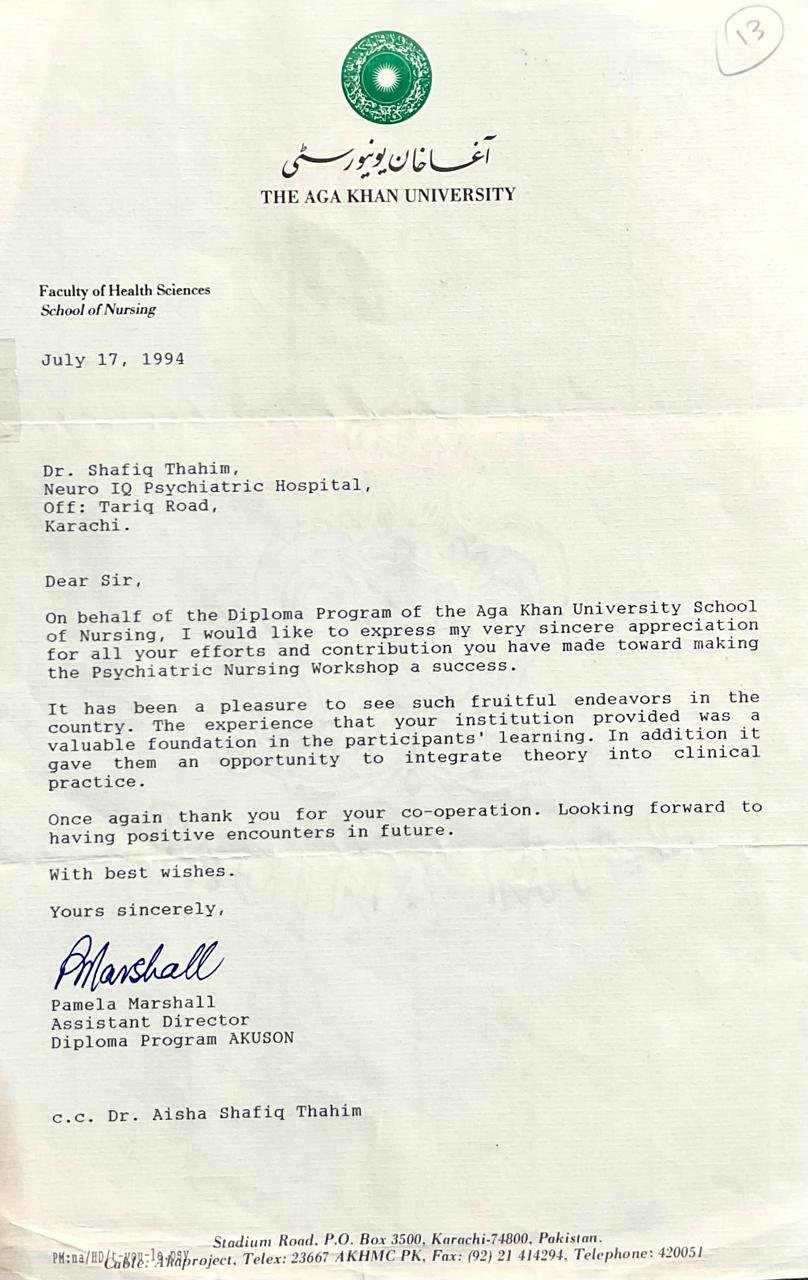
The Aga Khan University School of Nursing partnered with the team to conduct psychiatric nursing workshops in Karachi, establishing an early focus on professional training alongside clinical care.
Health Vision was registered as a welfare organization under the Directorate of Social Welfare, Government of Sindh. Its community work during this period included medical relief, psychiatric outreach, and initiatives aimed at communities with limited access to healthcare.
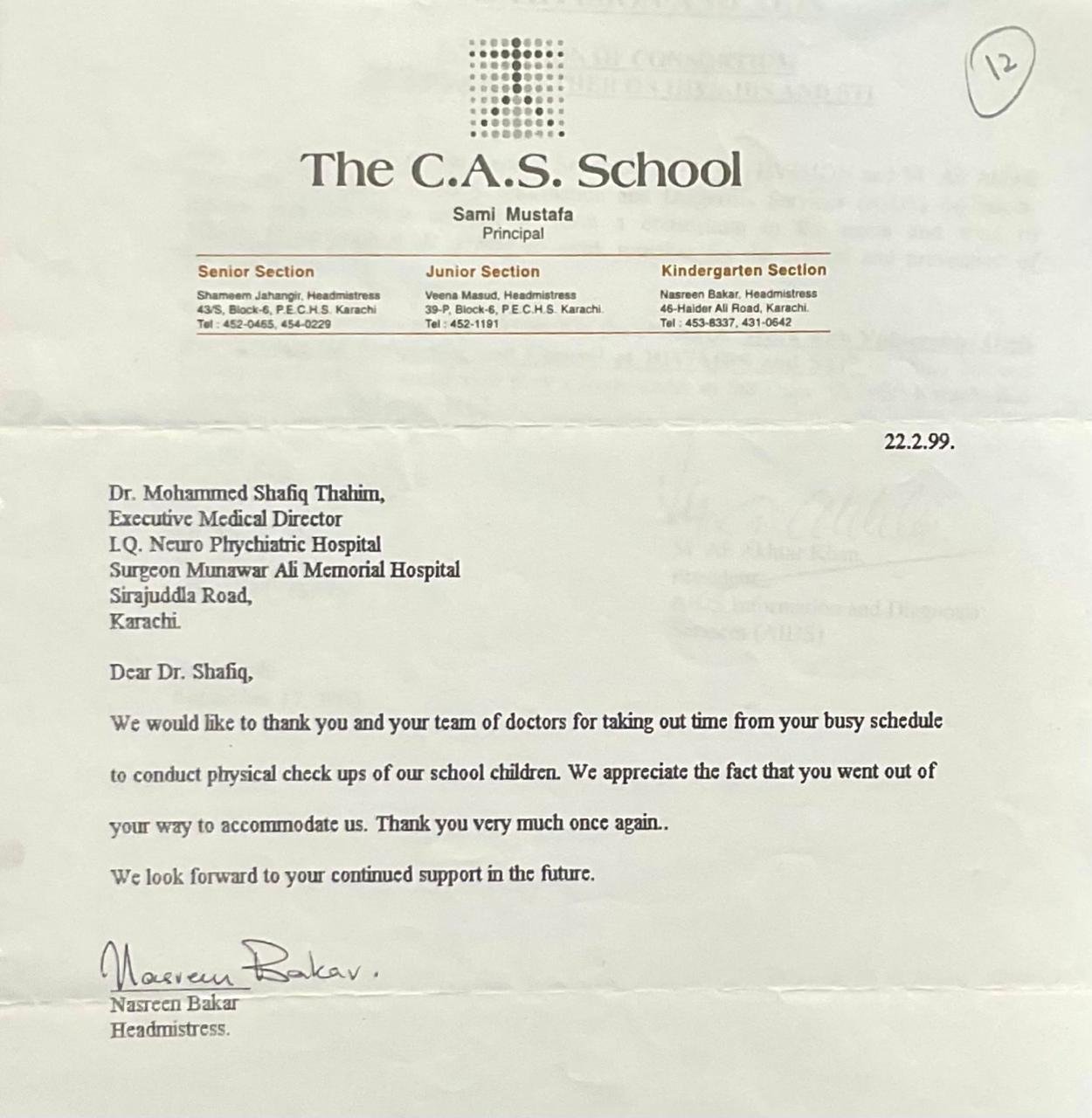
In 1999, the medical teams from IQ and Dr. Aisha’s Health Vision Hospital (then known as Surgeon Munawar Ali Memorial Hospital) extended their care beyond clinical settings, supporting one of Karachi’s leading educational institutions, The C.A.S. School. This early example of community-based mental health care foreshadowed the outreach-focused model we continue to follow today.
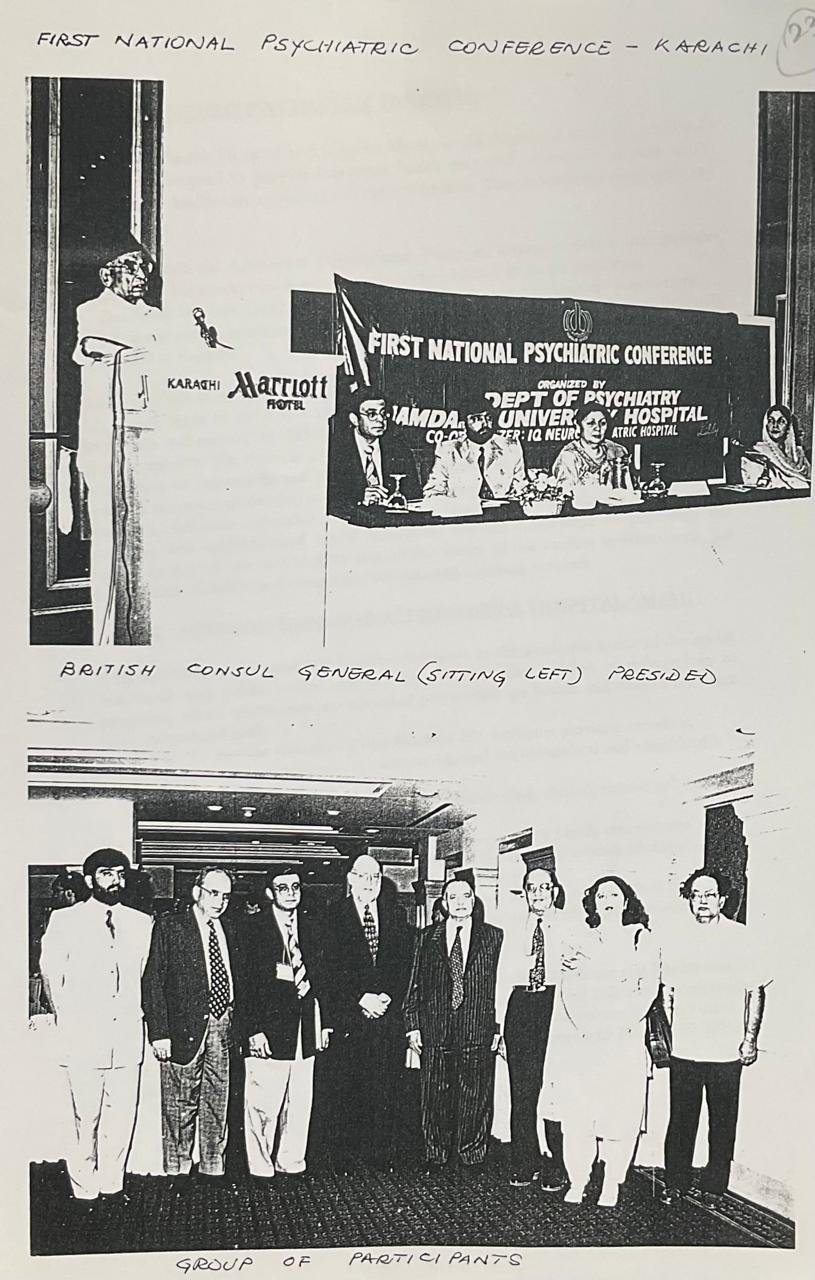
Health Vision played a key role in the First National Psychiatric Conference, held at the Karachi Marriott Hotel and organized by Hamdard University. Dr. Aisha Shafiq and Dr. Shafiq Thahim served as two of the chairpersons, contributing their expertise in community psychiatry and rehabilitation-based care. Their involvement reflected Health Vision’s growing role in shaping national mental health conversations. With participation from prominent clinicians and policymakers, including the British Consul General, the conference was a landmark moment in advancing psychiatric awareness and cross-institutional collaboration in Pakistan.
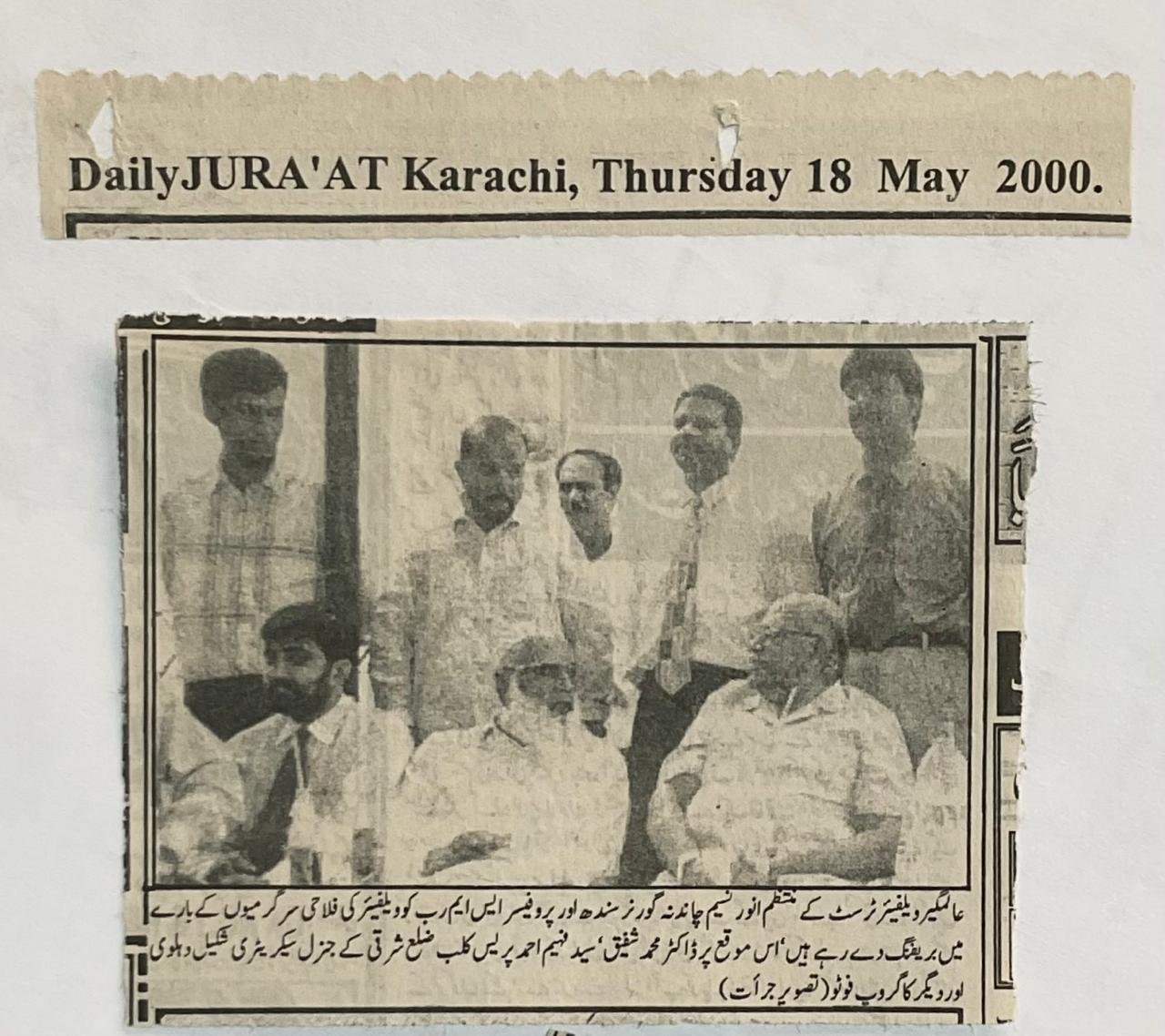
On May 18, 2000, Health Vision’s work in psychiatric care and community engagement was featured in Daily Ummat, one of Karachi’s major Urdu-language newspapers. This coverage not only acknowledged the efforts of our founders and early team members but also marked a turning point in public awareness of our mission. From media to ministry, the call for mental health care was beginning to echo beyond hospital walls.
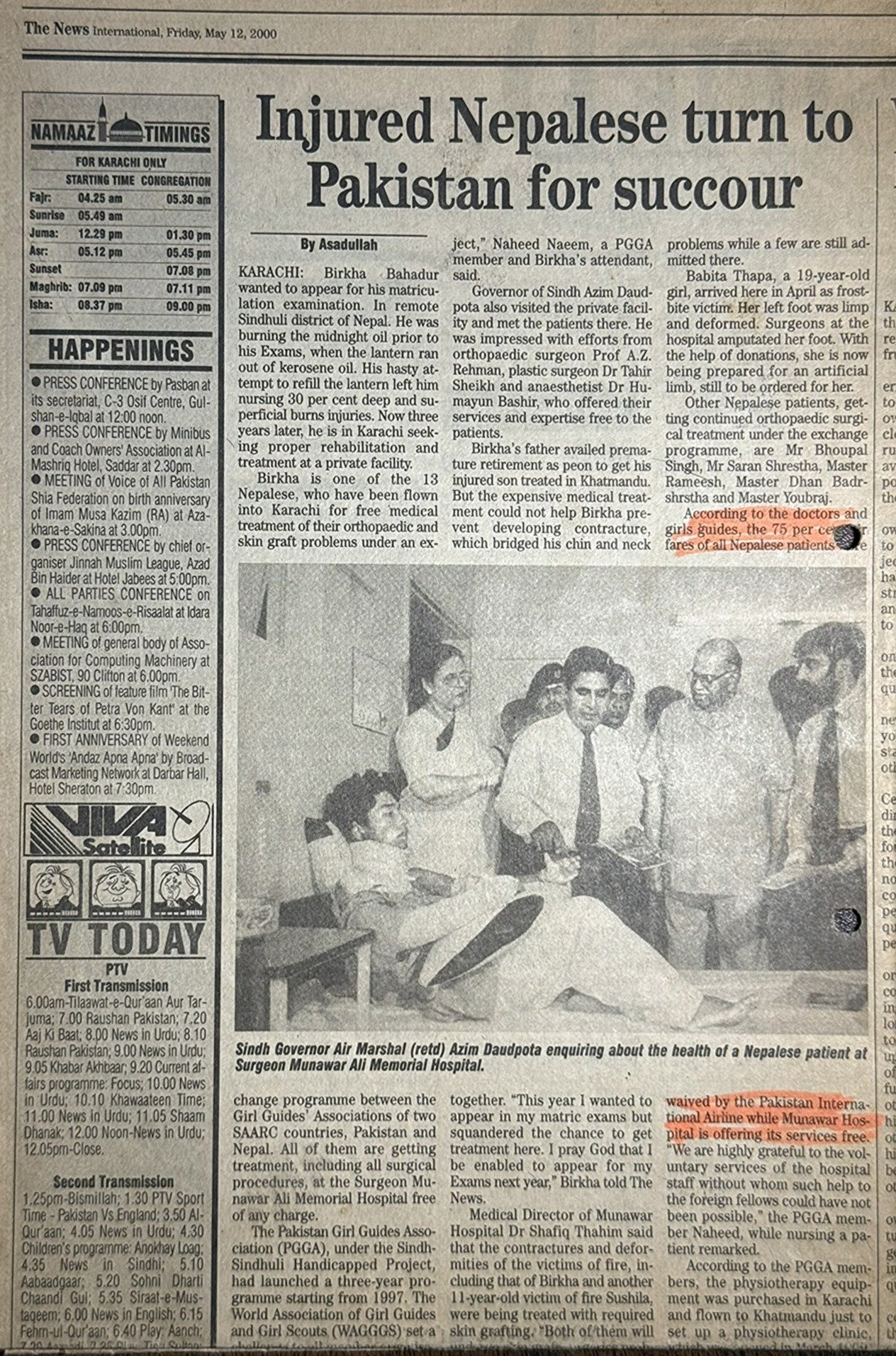
When injured Nepalese climbers needed urgent care after a tragic mountaineering accident, they were flown to Pakistan and treated at Dr. Aisha’s Health Vision Hospital (then known as Surgeon Munawar Ali Memorial Hospital). The story was covered by The News International, spotlighting how our hospital, in partnership with the Pakistan Girl Guides Association and other organizations, responded to the humanitarian crisis. This became a moment of national solidarity. Within days, provincial ministers and the Governor of Sindh visited the hospital to meet the patients and commend the care team.
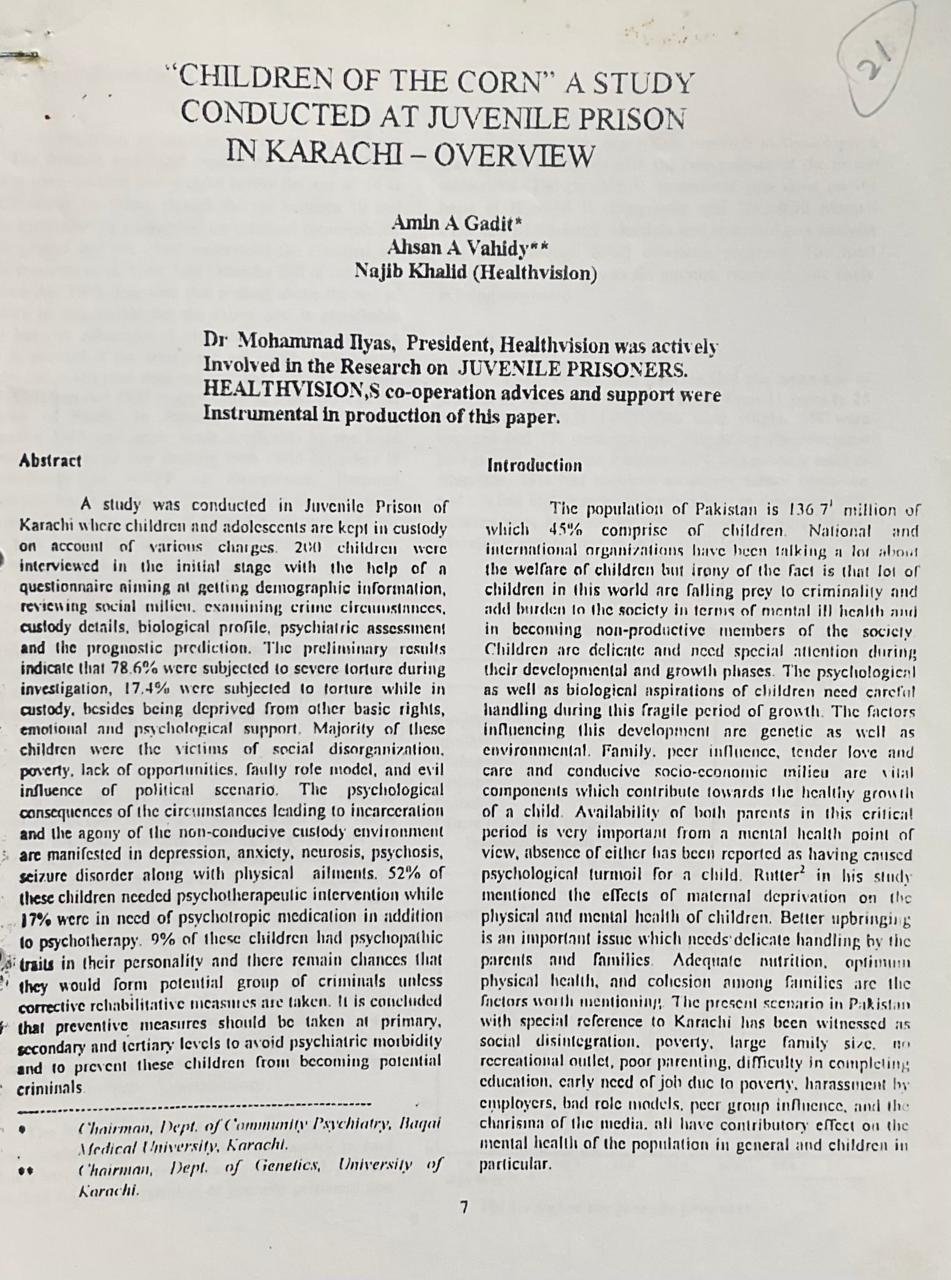
In collaboration with leading psychiatrist, Prof. Amin Gadit, Health Vision co-led a groundbreaking study titled “Children of the Corn”, one of the earliest psychiatric investigations inside Karachi’s juvenile prison. The study found that 78.6% of children were subjected to torture, 52% needed psychotherapy, and 17% required psychiatric medication. Many showed signs of deep trauma, psychosis, and disordered personality traits rooted in abandonment, abuse, and systemic neglect. Health Vision’s role was instrumental in both conducting and supporting the research. It was an urgent call to action, pushing for early mental health intervention to prevent a future pipeline to criminality. This moment marked Health Vision’s emergence as a strong advocate for prison reform, trauma-informed care, and rehabilitation-first justice for children.
Amid a severe drought in Tharparkar, Sindh, Health Vision mobilized a large-scale food distribution and medical relief effort to reach deep into some of the most marginalized areas of Sindh. Thousands gathered to receive essential aid under the open sky and among the Health Vision team was Imran Khan, a rising public figure who later went on to serve as the Prime Minister of Pakistan. From coordinating logistics to engaging directly with residents, this mission reflected Health Vision’s founding belief: that real healthcare begins where people are hurting most.
In the aftermath of devastating floods in Badin, Sindh, Health Vision joined hands as a founding member of the non-profit organization, Zindagi Trust, to lead an emergency medical and food relief mission. A team of 30+ paramedics, doctors, consultants, and volunteers traveled to the region to set up a three-day medical camp, providing essential healthcare to hundreds affected by the disaster. Health Vision also coordinated the distribution of 10 truckloads of food staples, offering much-needed sustenance to displaced families and communities.
In 2002, Health Vision (A Welfare Organization) was selected as an official Implementing Partner of the United Nations High Commissioner for Refugees (UNHCR). Over five months, our team led a large-scale repatriation project to support Afghan refugees returning home. We provided healthcare, immunisation, reproductive health education, and infectious disease prevention to over 157,000 refugees, with a focus on women, children, and the elderly. Every service was delivered not just with efficiency, but with dignity.
That same year, Health Vision joined hands with AIDS IDS to form one of Karachi’s earliest grassroots coalitions focused on HIV/AIDS awareness, prevention, and diagnosis. In response to a UNFPA/UNAIDS call for work with vulnerable populations, this consortium became a pioneering force to address stigma, spread education, and make testing accessible where it had never been before.
In collaboration with Zindagi Trust, Health Vision helped organize a special exhibition match: World XI vs. Pakistan. More than just a sporting event, the match brought communities together to raise awareness and support for social welfare initiatives, blending passion, purpose, and public spirit on a national stage.
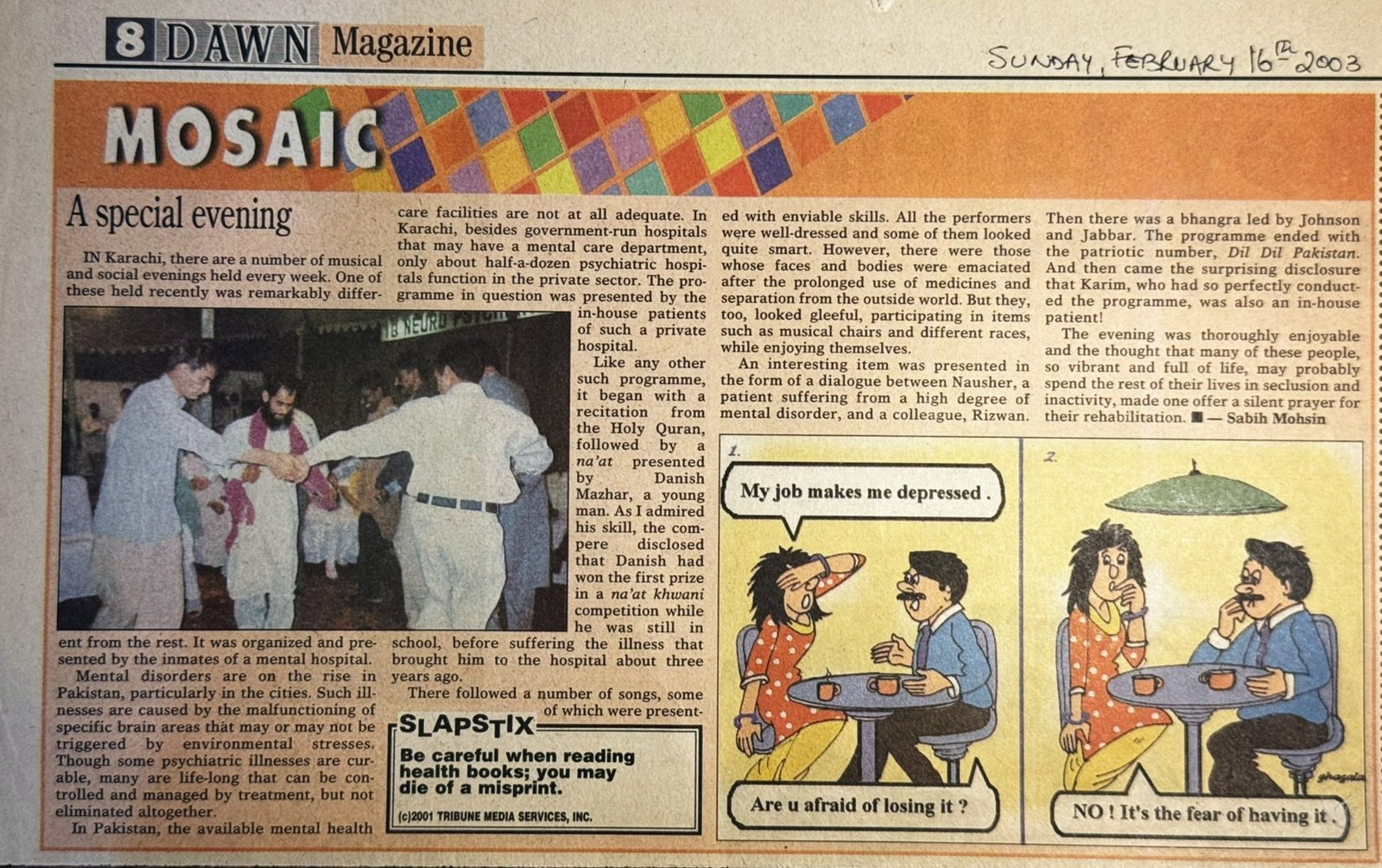
An extraordinary musical evening held entirely by psychiatric inpatients reminded us that healing is not just about medication. It’s also about dignity, creativity, and connection. From soulful na’ats to energetic bhangra, the night echoed with joy, talent, and hope. Long before mental health care became mainstream, our work focused on humanising it.
At a time when HIV/AIDS was still shrouded in stigma, Health Vision stepped into classrooms and communities with bold, education-first programming. Featured in national publications such as The News International and Financial Post, our AIDS awareness campaigns were designed for schools, colleges, and vulnerable youth groups. We trained teachers, hosted interactive sessions, and used real-life stories to counter myths. It was one of Pakistan’s earliest grassroots interventions of its kind, and Health Vision was at the forefront.
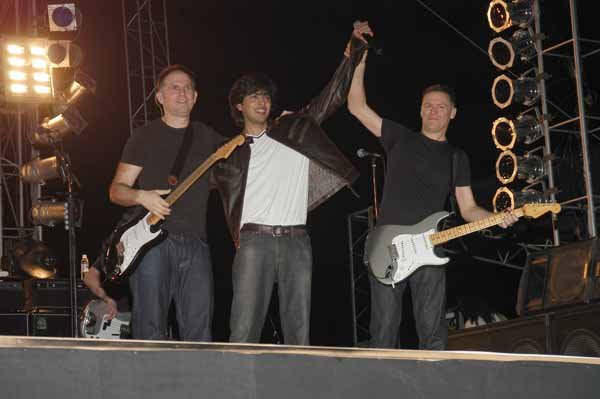
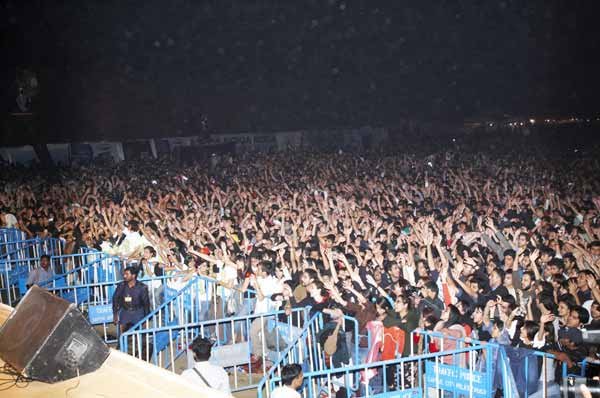
As part of Zindagi Trust, Health Vision helped organize one of Pakistan’s most unforgettable fundraising events: “Rock for a Cause,” featuring global music icon Bryan Adams. The concert drew massive crowds and nationwide media coverage, making headlines not just for the performance, but for the purpose behind it.
In partnership with Zindagi Trust, Health Vision helped launch schools in poverty-affected communities under the “I Am Paid to Learn” program. Children were given a Rs. 20 daily stipend to attend classes, turning education into both a right and a reward.
In collaboration with the AIDS Society, Health Vision conducted a series of seminars, workshops, and lectures in juvenile jails and detention centers across Karachi. The focus was HIV/AIDS prevention, education, and destigmatization, to reach vulnerable youth often left out of public health efforts.
Following the catastrophic earthquake in Pakistan’s Northern Areas, Health Vision set up a 2-month relief camp in the affected areas, including Balakot. With a team of 40 doctors and paramedics, we provided food, clothing, and medical aid to affected families to stand in solidarity with survivors during one of the darkest chapters in the country’s history.
Since 2006, Health Vision has been providing psychiatric consultations and nutritional support to children in the Garhi Khairo district (JCD). Through regular check-ins and food supplements, this long-standing program supports emotional well-being and healthy development for some of the region’s most vulnerable children.
Between 2007 and 2009, Health Vision supported small business creation through microfinance, helping individuals build sustainable livelihoods. From opening carpentry shops and grocery stores to setting up fruit stalls, these ventures empowered families with dignity, income, and long-term independence.
In partnership with House of Dreams NGO and Nixor College, Health Vision led a powerful youth-led relief mission to Gari Khairo, Jacobabad following catastrophic floods. A dedicated group of Nixor College students joined on ground, helping build 20 pre-fabricated steel houses and 50 cemented homes for displaced families. With support from the local government, we also provided medicines, food staples, and tents, ensuring urgent needs were met. This initiative wasn’t just about rebuilding homes. It was also about nurturing a new generation of socially conscious leaders through direct action and compassion.
Since 2010, Health Vision has been installing handpumps across water-scarce regions of Jacobabad, Thatta, and Badin. This ongoing effort has helped hundreds of families gain reliable access to clean water, reducing the burden on women and children and supporting better health outcomes in underserved communities.
In collaboration with Alamgir Welfare Trust, Health Vision helped distribute Rs. 25 million in cash assistance for the purchase of food staples. This initiative empowered families to meet their needs with choice and dignity, offering support that was both immediate and respectful.
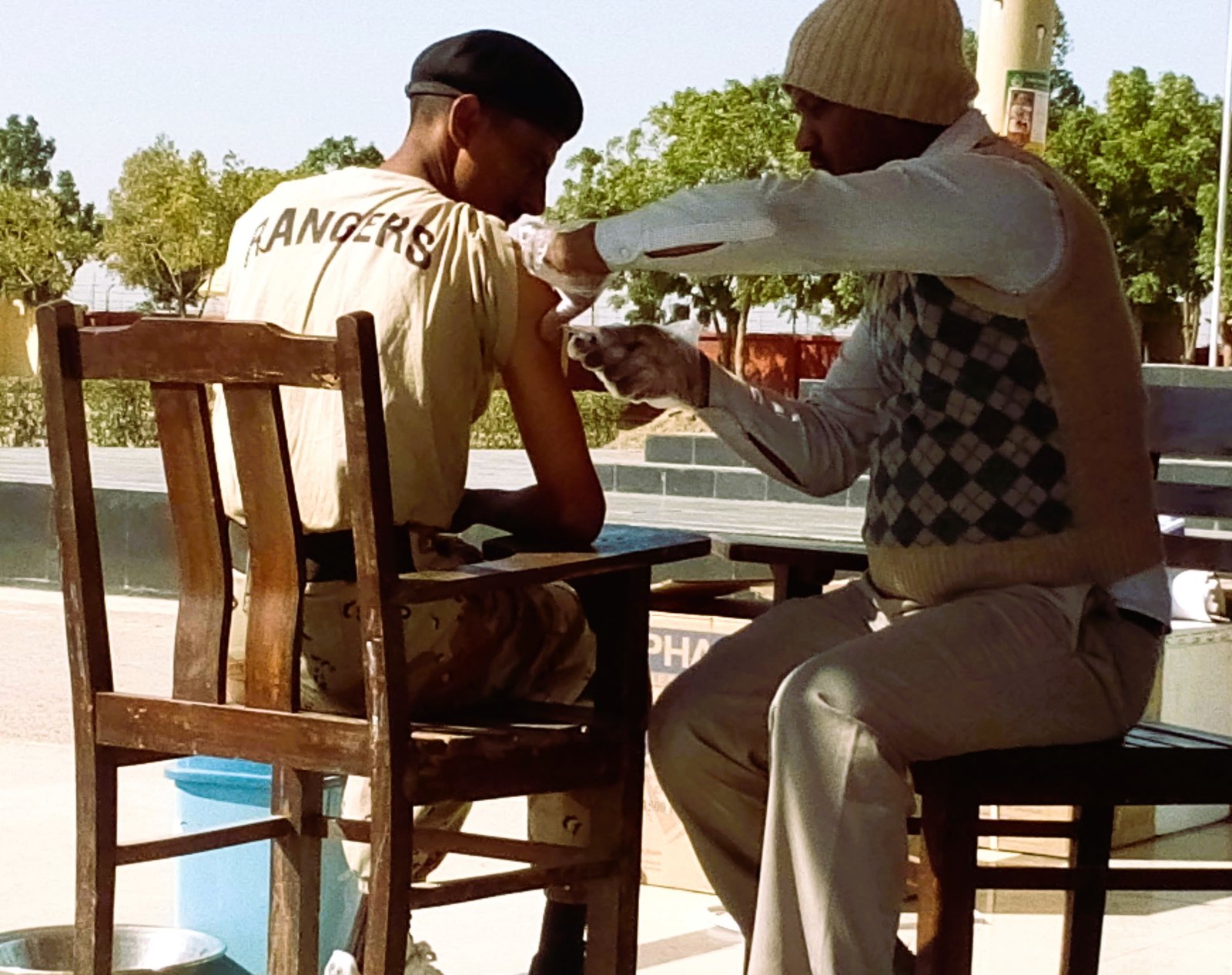
Over the span of two years, Health Vision led a massive Hepatitis B vaccination drive, reaching over 80,000 families across interior Sindh. The campaign also extended to Pakistan Rangers, Airport Security Force (ASF) personnel, and underserved areas of Karachi, ensuring protection for both vulnerable communities and frontline forces. It remains one of our largest preventive healthcare efforts to date.
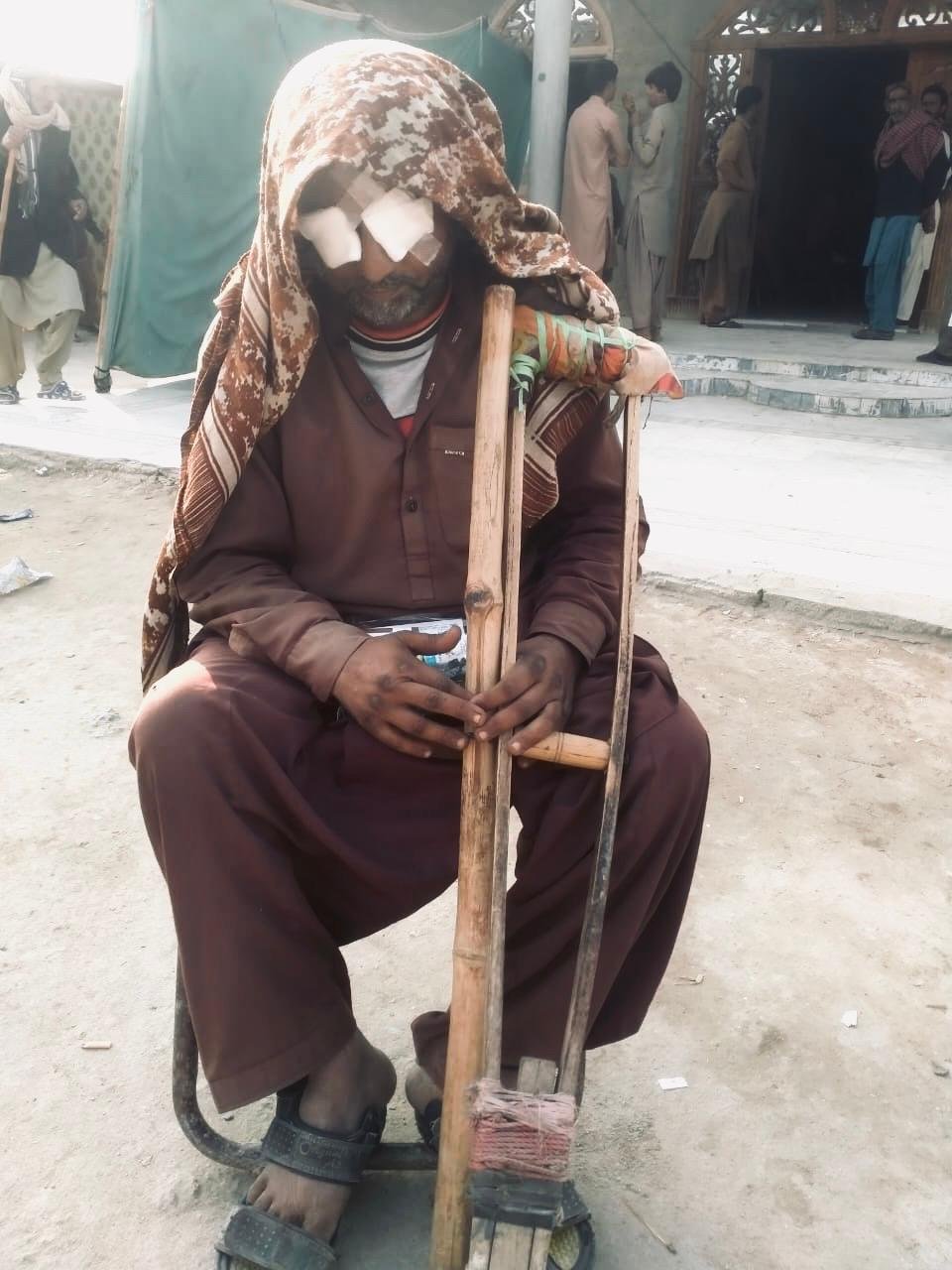
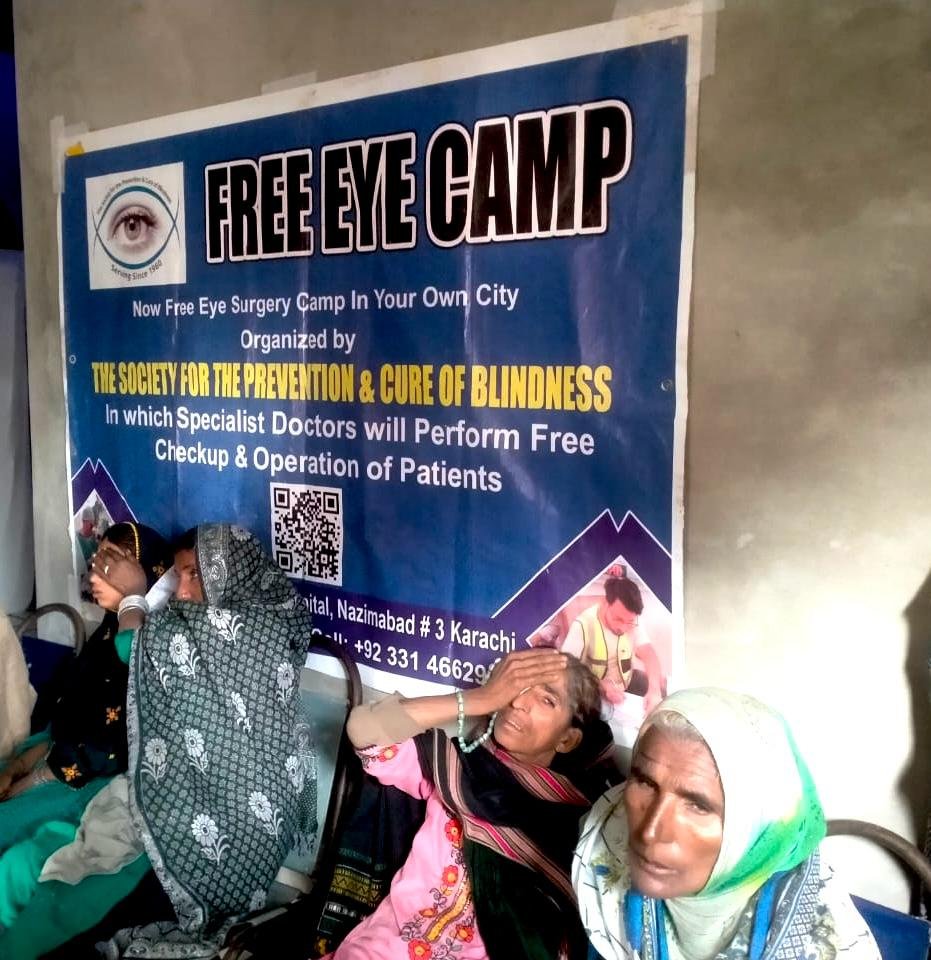
Since 2015, Health Vision has been conducting free surgical eye camps in collaboration with Saylani Welfare Trust (SWT), the Eye Society, and independent efforts. Operating across multiple districts, including Jacobabad, Gul Wah Sheranpur, Dakhan, Garhi Yasin, Shikarpur, Ratodero, Mohammad Pur, Dawoo, Kambar Shahdadkot, Dadu, Shahpur, Shahpur Chakar, and Sanghar, the camps provide over 10,000 intraocular lenses (IOLs) annually, free of cost. These camps have restored sight and independence to thousands, becoming one of Health Vision’s longest-running and most transformative public health initiatives.
In collaboration with Voice of Karachi (VOK), Health Vision supported a city-wide campaign across all districts of Karachi to set up Sabeel camps, distribute water coolers, ORS, and towels to help residents cope with extreme heat. Beyond immediate relief, we also partnered with local representatives to build roads and repair sewerage lines, addressing the long-standing infrastructural needs of underserved neighborhoods.
Between 2017 and 2019, Health Vision provided roofing materials to families living in semi-permanent housing across underserved areas. This simple yet impactful support helped improve safety, comfort, and dignity for countless households facing harsh weather and fragile living conditions.
In 2025, Health Vision supported the construction of three masjids in Meeran Shah, Kudan Thahim, and Gul Wah to create spaces for prayer, reflection, and unity. Alongside this, we continue to sponsor the religious education of over 150 students, including monthly support for Hafiz-e-Qur’an enrolled in Qur'anic studies. This initiative reflects our enduring belief that spiritual well-being is an essential part of holistic community care.
Health Vision (A Welfare Organization) achieved certification by the Pakistan Centre for Philanthropy (PCP), following an evaluation of its governance, financial management, and programme delivery. The certification reflects Health Vision’s continued development as a formally governed welfare organization and provides an additional level of institutional accountability for donors, partners, and the communities it serves.