
From Our Community
Ammarah Sakrani
Freelance Content Writer · Final Year BS Psychology, Bahria University Karachi
Internship in Neurodevelopmental Evaluations & Interventions · IQ Institute of Neuropsychiatry · February 2026
Where Are They Now
What 20 Hours in a Clinical Room Taught Her
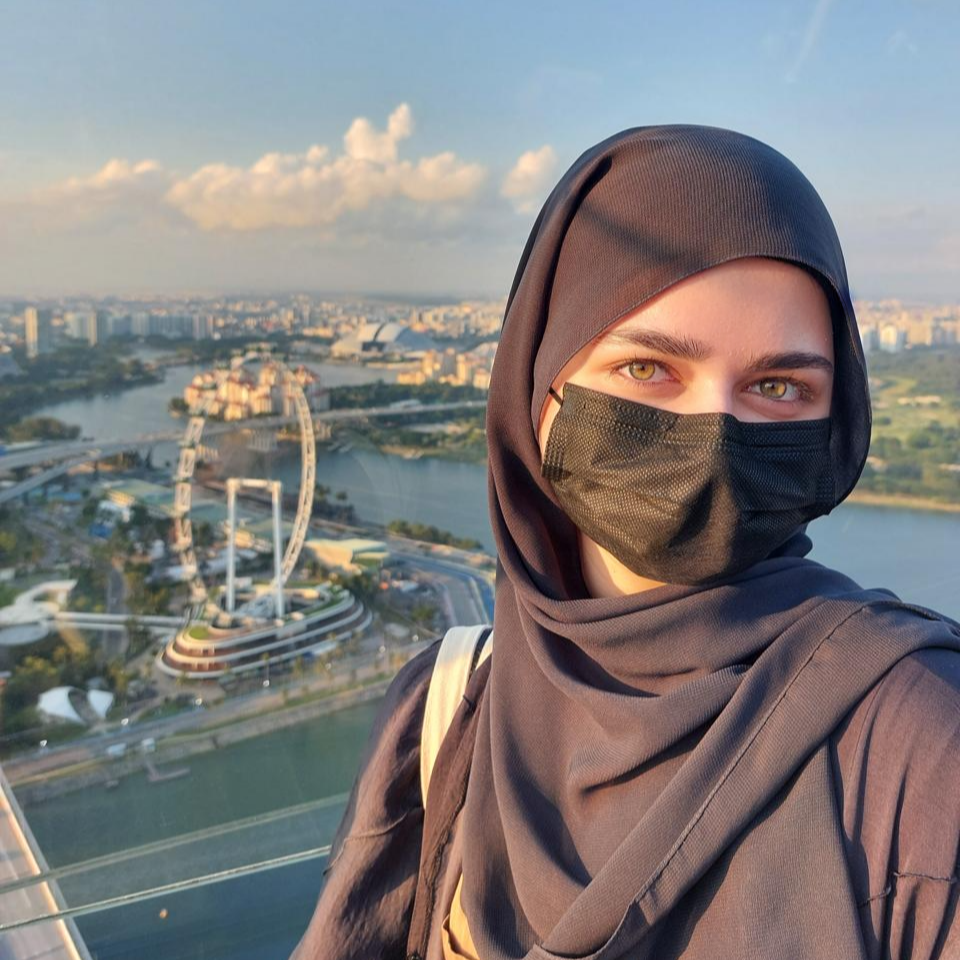
Ammarah Sakrani is a 7th semester BS Psychology student at the Institute of Professional Psychology, Bahria University, Karachi Campus, a freelance content writer, and the founder of her own psychology-focused website.
She completed her neurodevelopmental internship at IQ in February 2026 — and her first-ever clinical session was with a five-year-old boy who had no interest in following her plan.
“You don’t fully understand what unpredictable means until you are in the room yourself. There are things no teacher, no theory, no amount of reading can teach you. Only experience can.”
Ammarah Sakrani · Neurodevelopmental Intern, February 2026
When the Plan Falls Apart
Ammarah’s first clinical session was with a five-year-old boy. As interns, the focus was on socialisation and rapport-building, so she went in with a rough idea of how things would unfold: a few structured activities, some conversational topics. Reality had other plans.
The session proceeded at the client’s pace, not hers. He had trouble maintaining focus, switched between tasks quickly, and showed little interest in the structure she had prepared. Almost instantly, everything fell apart and she had to improvise on the spot.
“Rapport was not about having a nice conversation or sticking to an activity to extract required information. It was about entering the child’s world, following his lead, and finding openings that could spark connection.”
Ammarah Sakrani
What Rapport Actually Looks Like
On paper, building rapport sounded simple. In practice – especially with a neurodiverse client – it was far more nuanced. It required patience to read non-verbal cues, flexibility to follow rather than lead, and the ability to find meaning in small moments.
“Rapport can look like a moment of eye contact, or a child allowing you into their play without resistance, or even a small moment of shared attention. These moments may seem minor — but in the clinical room, they held significance.”
Ammarah Sakrani
The Role of Energy in the Room
A key lesson came through her clinical supervisor, Dr. Mahnoor Khan, and her emphasis on energy. Students are often taught the value of remaining calm and composed in therapeutic settings, which is critical, but Ammarah discovered that calmness alone is not always enough.
When a session loses momentum, the therapist cannot become passive. Dr. Mahnoor demonstrated how energetic presence, animation, and flexibility could redirect a child’s attention and sustain engagement in ways that stillness could not.
“It is essential to stay engaged and responsive even when the client isn’t. Especially in neurodevelopmental work, the ability to shift tone, pace, or activity in real time is crucial.”
Ammarah Sakrani
Structure and Flexibility
During peer sessions, Ammarah had to manage multiple children’s energies and interactions simultaneously. There were moments when neither child was interested in participating. She had to modify objectives instantly while maintaining the session’s framework, learning in real time how to hold structure loosely enough to bend without breaking it.
“Clinical work isn’t just about knowing techniques. It is about learning how to apply them with empathy, patience, and flexibility.”
Ammarah Sakrani
Where She Is Now
Today, Ammarah balances her final year of undergraduate studies with freelance content writing and running her own psychology-focused website at ammarah.sakrani.com. The flexibility she learned during her internship shows up in her work daily, particularly as she navigates her thesis.
“As a final year student, I’m working on many academic projects, especially my thesis, where things don’t always go as planned. The internship helped me develop that mindset — teaching me how to adapt on the fly instead of getting stuck when things don’t go as planned.”
Ammarah Sakrani
She’s currently focused on gaining more practical exposure in both clinical work and research, with particular interests in psychological disorders and deviant behavior. She’s also exploring forensic psychology.
Her Advice to Hesitant Students
“If I had one piece of advice for psychology students who are hesitant to apply because they don’t feel ready — just go for it. Take the leap. Whether you’re in your first year or your final year, hands-on exposure teaches you things that theory alone cannot. The value and growth at the end are much greater.”
Ammarah Sakrani
Why This Matters
Ammarah walked into her internship expecting clinical work to be textbook-like. She left with something no textbook could have given her: the ability to adapt, stay present, and find connection in moments that aren’t in any lesson plan. That is what the IQ neurodevelopmental internship is designed to build.
Train With Us
Start your own journey
View Internship Tracks
Explore TAP, MHC, and Neurodevelopmental programs currently open or opening soon.
See All Tracks →Read More Stories
See where others from our community have gone and what they’re building now.
From Our Community →