This article was written by Ummul Huda, an undergraduate psychology student at Virtual University of Pakistan. Drawing on her clinical internship experience, Ummul Huda examines AI mental health apps like Woebot and Wysa, uncovering what these tools do well, where they fall short, and why human empathy remains irreplaceable in healing. psychological support, awareness, and community care in addressing its impact on mental health.
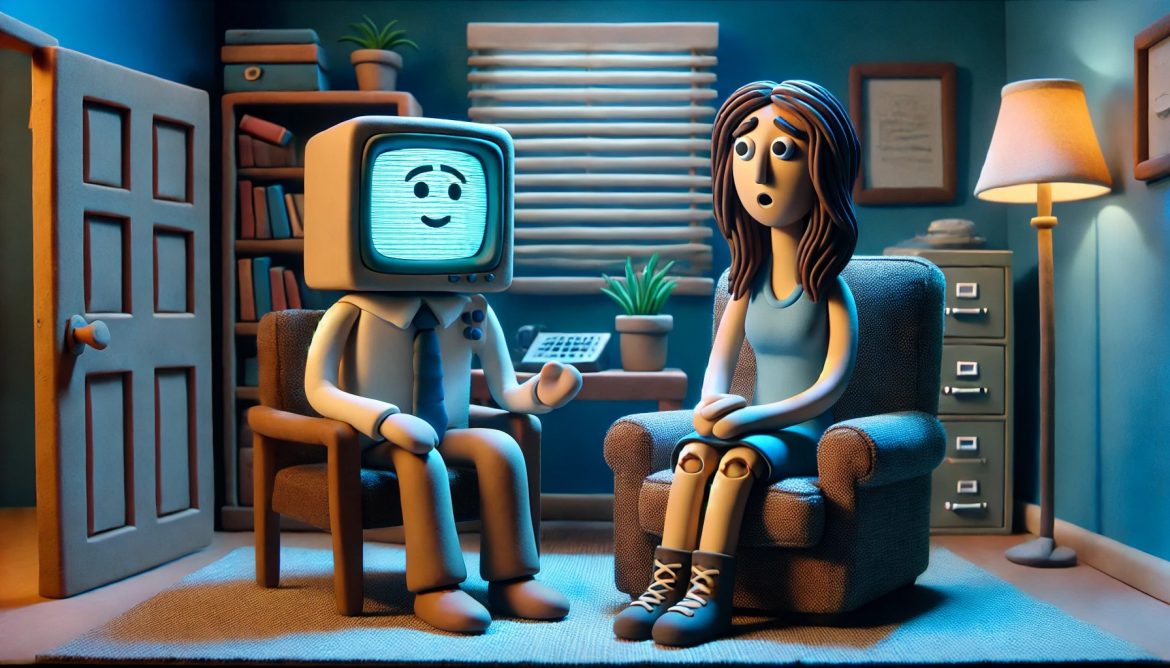
A few years ago, the idea of chatting with a robot about your feelings sounded like science fiction. But now, AI-powered mental health apps like Woebot, Wysa, and Mindstrong are part of our daily lives, offering instant support, mood tracking, and self-help exercises. As a psychology student, I found myself wondering: can these tools actually replace a human therapist?
Mental health isn’t just about exercises or guidance, it’s about being seen, heard, and understood. AI can provide exercises, reminders, or track moods, but it can’t offer the warmth, intuition, or reassurance that a human can.
How AI Helps
There’s no denying that AI has its strengths. Imagine someone struggling with anxiety late at night. A therapist isn’t always available, but a chatbot can respond immediately, offering coping exercises or even just a non-judgmental space to “vent.” For instance, Woebot might prompt: “What’s one stressful thing that happened today? Let’s break it down together,” while Wysa guides users through a CBT journaling exercise: “List three thoughts that made you anxious today, then let’s challenge them.” AI can also track patterns over time, helping users notice triggers and progress.
Early research and user reports suggest these apps can be effective for managing mild to moderate symptoms of anxiety and depression. A randomized trial found that Woebot helped reduce depression symptoms in young adults over just two weeks (Fitzpatrick et al., 2017), while real-world data showed that Wysa users reported improvements in anxiety and overall well-being (Inkster et al., 2018). For people who hesitate to seek help because of stigma or cost, these tools can serve as a valuable bridge to care.
Where AI Falls Short
But here’s the thing: AI can’t fully understand the human experience. It can’t read the subtle tone in a voice, see a nervous fidget, or sense the unsaid fear behind a sentence. It can’t hear the crack in your voice that signals a looming panic attack, or see the tears you’re fighting back. It can’t remember the story of your childhood pet and use that memory to build a metaphor for resilience next week.
During my internship at an institution providing therapeutic care for children and adults with disabilities and diverse mental health needs, I observed how a simple act of listening and validating a patient’s feelings could dramatically improve their mood. One patient, visibly anxious and withdrawn, brightened considerably after a short conversation where they felt truly heard. AI can’t replicate that human connection, intuition, or empathy.
Furthermore, when someone is going through a serious mental health crisis, relying on AI alone can be risky. Privacy and ethical concerns also matter; personal data can be exposed, and a robot can’t take responsibility for mistakes. Most importantly, these apps are not equipped to handle severe crises or suicidal ideation. Their response in these situations is typically an automated message directing users to emergency hotlines—a critical delay where a human would act immediately.
The Human-AI Balance
I’ve realized that the future of mental health isn’t AI replacing therapists, it’s AI supporting them. Imagine a patient using an AI app to log their mood swings between sessions. Their therapist can then review this data with them, not just as numbers on a chart, but as a starting point for a conversation: “I see your anxiety spiked on Tuesday afternoons. Tell me about what was happening then.” The AI provides the data; the human provides the interpretation, context, and healing.
Conclusion
AI chatbots can provide guidance, track moods, and help with self-care exercises, while human therapists focus on connection, understanding, and empathy. Psychological support, empathy, and early intervention are essential. AI apps are powerful tools for support, but they cannot replace the human connection at the heart of mental health care. Technology can guide the way, but it can’t walk the path for us.
References:
Fitzpatrick, K. K., Darcy, A., & Vierhile, M. (2017). Delivering Cognitive Behavior Therapy to Young Adults With Symptoms of Depression and Anxiety Using a Fully Automated Conversational Agent (Woebot): A Randomized Controlled Trial. JMIR Mental Health, 4(2), e19.
Link: https://mental.jmir.org/2017/2/e19/
Inkster, B., Sarda, S., & Subramanian, V. (2018). An Empathy-Driven, Conversational Artificial Intelligence Agent (Wysa) for Digital Mental Well-Being: Real-World Data Evaluation Mixed-Methods Study. JMIR mHealth and uHealth, 6(11), e12106.